
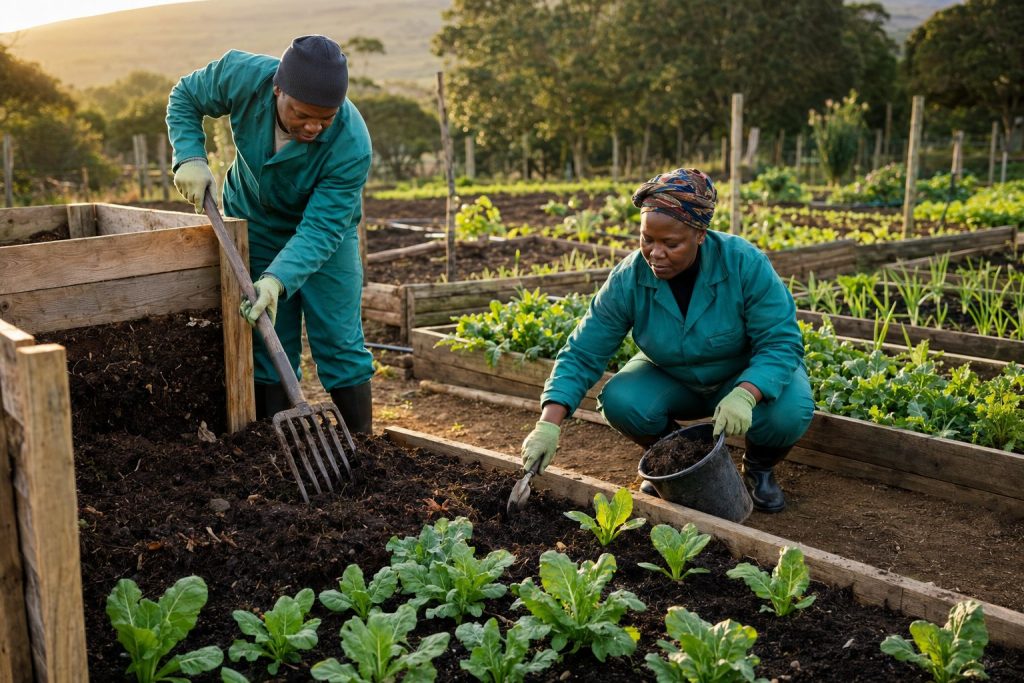
Healthy crops begin with healthy soil. When soil has the correct nutrients, suitable structure, sufficient organic matter and good water-holding capacity, plant roots can develop properly and absorb what they need.
However, soil fertility does not remain constant. Every harvested crop removes nutrients from the land. Heavy rainfall can wash nutrients away, erosion can remove valuable topsoil, and repeated planting of the same crop can gradually reduce soil quality.
Improving soil fertility therefore requires more than simply applying fertilizer. Farmers need to understand their soil, identify the nutrients their crops require and use farming practices that protect the land over time.
This guide explains how soil testing, fertilizers, compost, crop rotation, cover crops and better soil management can support stronger crop growth.
What Is Soil Fertility?
Soil fertility is the soil’s ability to provide plants with the nutrients, water, air and suitable root environment needed for healthy growth.
Fertile soil usually has:
- Essential plant nutrients in suitable amounts
- A soil pH appropriate for the crop
- Good drainage without drying too quickly
- Sufficient organic matter
- A structure that allows roots to grow
- Active soil organisms
- Protection from erosion and excessive compaction
A field may look healthy on the surface while still having nutrient deficiencies, acidity or other problems below ground. This is why farmers should combine visual crop inspections with proper soil testing.
Understanding Different Soil Types
Soil type affects drainage, nutrient retention, root development and the amount of fertilizer or organic matter that may be required.
Sandy Soil
Sandy soil has relatively large particles and usually drains water quickly. It is easy to cultivate, but it can lose moisture and nutrients faster than heavier soils.
Farmers working with sandy soil may need to:
- Add compost or well-decomposed organic matter
- Keep the soil covered with mulch
- Apply nutrients according to soil-test recommendations
- Monitor moisture more frequently
- Avoid applying more fertilizer than the crop can use
Clay Soil
Clay soil contains very small particles and can hold considerable water and nutrients. However, it may become compacted, waterlogged or difficult to work when wet.
Clay soil can often be improved by:
- Adding suitable organic matter
- Avoiding cultivation when the soil is extremely wet
- Creating drainage where necessary
- Reducing unnecessary movement of heavy equipment
- Keeping living roots in the soil through cover crops
Loamy Soil
Loam contains a useful balance of sand, silt and clay. It generally supports good drainage, nutrient retention and root growth, making it suitable for many crops.
Loamy soil still needs regular management. Cropping, erosion and nutrient removal can gradually reduce its fertility if nutrients and organic matter are not replaced.
Silty Soil
Silty soil is generally smooth, fertile and able to retain water. However, exposed silty soil can compact or erode relatively easily.
Maintaining crop residue, mulch or cover crops can help protect its surface.
Most agricultural fields contain a combination of soil types. Conditions can also vary across the same field, particularly where there are slopes, wet areas or a history of different land uses.
Signs of Poor Soil Fertility
Poor crop growth does not always mean that fertilizer is required. Similar symptoms may be caused by insufficient water, waterlogging, pests, diseases, soil acidity, damaged roots or unsuitable weather.
Possible signs of fertility problems include:
- Slow or uneven crop growth
- Pale-green or yellow leaves
- Purple or reddish leaf colouring
- Weak stems
- Poor root development
- Leaves developing brown edges
- Plants remaining smaller than expected
- Reduced flowering or fruit production
- Low yields
- Patches of weak plants within a field
The location of symptoms can provide useful clues. For example, symptoms appearing first on older leaves may indicate a different problem from symptoms that begin on new growth. Visual symptoms alone, however, should not be used to select a fertilizer.
Why Soil Testing Is Important
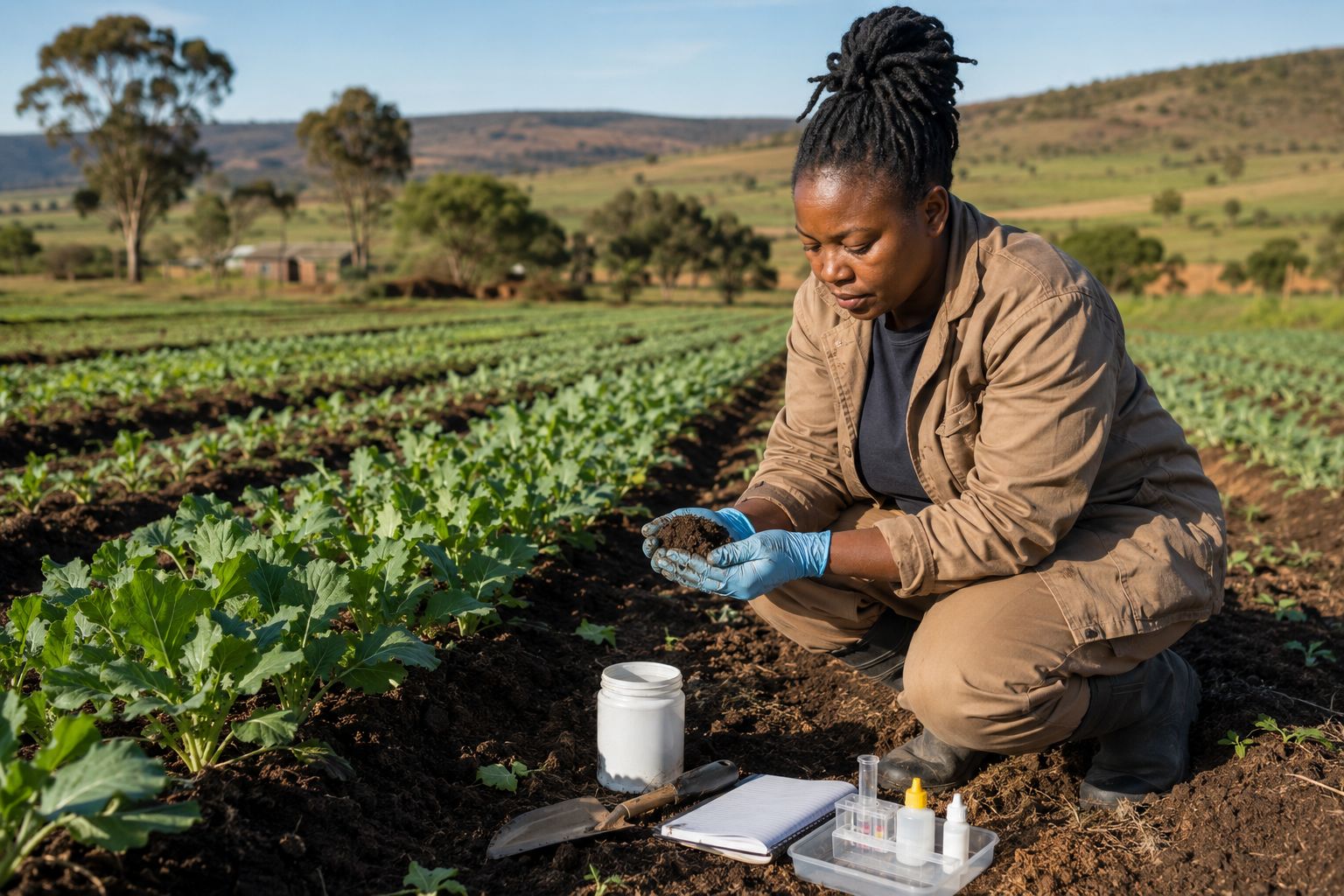
Soil testing helps farmers understand what is happening below the surface before spending money on fertilizers or soil conditioners.
A soil analysis may provide information about:
- Soil pH and acidity
- Available phosphorus and potassium
- Calcium and magnesium
- Organic matter
- Salinity
- Possible nutrient shortages or imbalances
- Lime requirements
- Fertilizer recommendations for a particular crop
The KwaZulu-Natal Department of Agriculture explains that soil testing identifies available nutrients and soil acidity, helping farmers correct the most limiting problem and use fertilizer and lime more efficiently. Read the soil-testing guide.
A representative sample is essential. Avoid taking soil only from the easiest part of the field. Samples should represent the actual planting area, while visibly unusual sections may need to be sampled separately.
When sending soil for testing, include information about:
- The crop you plan to plant
- Previous crops grown
- Fertilizers or lime previously applied
- Irrigation conditions
- Known drainage or crop-growth problems
Essential Nutrients Crops Require
Plants require several nutrients to complete their growth cycle. The three primary nutrients commonly displayed on fertilizer packaging are nitrogen, phosphorus and potassium.
Nitrogen
Nitrogen supports leafy growth and the formation of chlorophyll. A shortage may cause pale or yellowing leaves and weak growth.
Too much nitrogen can produce excessive soft growth, delay maturity and increase nutrient losses. Nitrogen should therefore be supplied according to the crop’s requirements and growth stage.
Phosphorus
Phosphorus supports root development, early plant establishment, flowering and energy transfer within the plant.
Its availability can be affected by soil pH, temperature and soil conditions. Adding phosphorus without testing may be wasteful if the soil already contains enough or if another soil problem is preventing uptake.
Potassium
Potassium contributes to water regulation, plant strength, crop quality and the ability of plants to tolerate certain environmental stresses.
Repeated harvesting without replacing removed potassium can gradually reduce soil reserves.
Secondary Nutrients and Micronutrients
Crops also require secondary nutrients such as calcium, magnesium and sulphur, together with smaller quantities of micronutrients including zinc, iron, boron, manganese, copper and molybdenum.
Micronutrients are required in small amounts, but a shortage can still affect crop growth. Applying them without evidence can create imbalances or harm crops, so soil or plant-tissue analysis should guide their use.
Organic Matter, Compost and Soil Conditioners
Organic matter plays an important role in soil fertility, but it is not a complete replacement for soil testing or a balanced nutrient programme.
Suitable organic materials can help:
- Improve soil structure
- Increase water retention in sandy soil
- Improve drainage and workability in some heavy soils
- Support beneficial soil organisms
- Reduce surface crusting
- Return nutrients to the soil
- Protect soil from temperature extremes
Possible sources include:
- Properly prepared compost
- Well-decomposed manure
- Crop residue
- Mulch
- Green manure crops
- Suitable registered soil conditioners
Only mature, properly handled organic materials should be used. Fresh or contaminated material may damage crops, introduce weed seeds or create nutrient problems.
The Agricultural Research Council notes that keeping crop residue and cover crops on the land contributes organic matter, while compost, manure and mulch can further support fertility. View the ARC soil and water management resource.
Mixed farms should manage crop and livestock activities as connected but separate systems. Farmers can also explore KwaNomfuyo Agri’s animal feed, fodder and dog-food products and animal-health and medication enquiries when planning their wider farm requirements.
Choosing the Appropriate Fertilizer
There is no single fertilizer that is suitable for every crop, field and growth stage. The correct option depends on:
- Soil-test results
- Crop type
- Expected production level
- Growth stage
- Soil pH
- Previous fertilizer applications
- Irrigation and rainfall
- Nutrients removed by earlier harvests
- Application method
Fertilizer labels normally show the nutrient analysis. Farmers should confirm what the numbers mean and follow the registered product instructions carefully.
Before purchasing fertilizer, ask:
- Which crop will be planted?
- What does the soil analysis recommend?
- How large is the planting area?
- Is the fertilizer intended for planting or later growth?
- What package size is required?
- What protective equipment is recommended?
- How should the product be stored?
KwaNomfuyo Agri assists farmers with enquiries about fertilizers, soil nutrients and crop-protection products, including available product options, package sizes and prices.
When Crops May Require Additional Nutrients
Some crops need nutrients at more than one stage of development. A base or planting fertilizer may support establishment, while an additional application may be recommended later as crop demand increases.
Possible reasons for an additional nutrient application include:
- The crop has entered a rapid-growth stage
- Nitrogen has been lost through heavy rain or leaching
- Sandy soil cannot retain nutrients for long periods
- A soil or leaf analysis identifies a shortage
- The crop has a long production period
- High yields are removing substantial nutrients
- Earlier fertilizer was applied incorrectly
Additional fertilizer should not be applied simply because plants appear weak. First check soil moisture, roots, drainage, pests, diseases and soil pH.
Never exceed label directions or mix agricultural products unless the instructions clearly permit it.
Protecting Soil from Erosion
Erosion removes topsoil—the part of the soil that often contains the highest concentration of organic matter, roots and biological activity.
Warning signs include:
- Small channels forming after rainfall
- Soil accumulating at the lower end of a field
- Exposed crop roots
- Hard, sealed soil surfaces
- Muddy runoff leaving the field
- Declining growth on slopes
Farmers can reduce erosion by:
- Keeping the soil covered
- Planting across slopes where appropriate
- Using grassed waterways
- Reducing unnecessary tillage
- Retaining crop residue
- Adding mulch
- Establishing windbreaks
- Avoiding overgrazing
- Directing runoff safely
- Using cover crops between production cycles
Suitable planting tools, protective clothing, irrigation products and other agricultural equipment and farm supplies can support better soil and crop management.
Crop Rotation and Cover Crops
Planting the same crop repeatedly can place continuous demand on the same nutrients while allowing certain pests, weeds and diseases to become established.
Crop rotation means planting different crop families in a planned sequence. A farmer might, for example, rotate a cereal crop with a legume and then a broadleaf vegetable, depending on local conditions and market requirements.
A suitable rotation can:
- Improve nutrient cycling
- Reduce pest and disease pressure
- Support better soil structure
- Spread farming risk
- Introduce different root systems
- Improve residue diversity
- Reduce dependence on one crop
Cover crops are planted mainly to protect and improve the soil rather than for immediate sale. Depending on the species selected, they may:
- Reduce erosion
- Suppress weeds
- Add organic matter
- improve water infiltration
- Capture nutrients that might otherwise be lost
- Support beneficial soil organisms
- Help break certain pest and disease cycles
Cover crops still require planning. The selected crop must be suitable for the climate, available water, soil conditions and next commercial crop.
The ARC identifies minimum soil disturbance, permanent soil cover and crop rotation or diversification as important conservation-agriculture practices. See the ARC resource.
Common Fertilizer Mistakes
Applying Fertilizer Without Testing
This can waste money and may fail to correct the actual limiting problem.
Assuming More Fertilizer Means More Growth
Excess fertilizer can damage plants, increase costs and allow nutrients to move into waterways.
Using the Same Fertilizer for Every Crop
Different crops—and different growth stages—do not always have the same nutritional requirements.
Ignoring Soil pH
A field may contain nutrients that crops cannot access efficiently because the soil is too acidic or too alkaline.
Applying Fertilizer Before Heavy Rain
Heavy rainfall can wash fertilizer away or move mobile nutrients beyond the root zone.
Placing Fertilizer Too Close to Seeds or Roots
Some products can damage seeds or young roots when incorrectly positioned. Always follow the product’s placement instructions.
Applying Unevenly
Uneven application can produce strong growth in one section and weak or damaged plants in another.
Neglecting Protective Equipment
Use the protective clothing and equipment stated on the product label, such as gloves, boots, overalls, masks or eye protection.
Poor Storage
Fertilizer should be stored securely in its original labelled packaging, away from animal feed, children, water, seed and food products.
A Practical Soil-Fertility Plan
Use this simple process before the next planting season:
- Identify the crop and intended planting area.
- Inspect the field for erosion, drainage and compaction problems.
- Take representative soil samples.
- Use the test results to identify limiting nutrients and pH problems.
- Select a suitable fertilizer or soil conditioner.
- Add mature organic matter where appropriate.
- Plan the application timing and method.
- Use appropriate protective equipment.
- Keep the soil covered wherever possible.
- Record what was applied and monitor crop growth.
- Review the results after harvest.
- Plan a suitable crop rotation for the next season.
Good records make it easier to compare fields, identify recurring problems and avoid repeating unnecessary applications.
Frequently Asked Questions
How can I improve soil fertility naturally?
Add suitable mature compost or well-decomposed organic matter, retain crop residue, use mulch, plant cover crops and rotate crops. Natural soil improvement should still be guided by soil conditions and crop requirements.
How do I know which fertilizer my crops need?
Begin with a representative soil test and identify the crop you intend to plant. The results can guide the nutrient type, amount and timing required.
Can compost replace fertilizer?
Compost improves organic matter and soil structure and may supply some nutrients. However, its nutrient content varies, and it may not provide everything a crop requires in the correct amounts.
How often should soil be tested?
Testing before establishing a new crop or when growth problems occur is useful. The suitable testing interval depends on cropping intensity, soil type and previous results. Maintain consistent records and follow laboratory or agricultural recommendations.
What is the best soil type for crop production?
Loamy soil is suitable for many crops because it generally balances drainage, moisture retention and nutrient availability. However, sandy and clay soils can also produce healthy crops when properly managed.
Does crop rotation improve soil fertility?
A well-planned rotation can improve nutrient cycling, introduce different root systems, add organic matter and reduce pressure from certain pests and diseases. Its effectiveness depends on the crops selected and local growing conditions.
What protective equipment is needed when applying fertilizer?
Requirements vary by product. Read the label and use the specified gloves, boots, protective clothing, mask or eye protection.
Can too much fertilizer damage crops?
Yes. Excess fertilizer can harm roots, reduce crop quality, waste money and contribute to nutrient losses. Apply only the recommended product and amount.
Improve Your Soil and Grow Healthier Crops
Improving soil fertility is a continuous process. Soil testing, appropriate fertilizer selection, organic matter, erosion protection, crop rotation and good record-keeping work together to support productive farming.
Contact KwaNomfuyo Agri to enquire about available fertilizers, soil nutrients, planting supplies, protective equipment, package sizes and prices.